

A competitor cuts its price by 10 percent. The sales team asks to match it. The promotion performs well enough, so the retailer requests another one next month. Then another brand joins. Three months later, the original shelf price is still printed on the pack, but everyone involved knows the yellow promotional sticker is doing most of the selling.
The obvious response is to build stronger differentiation. It may be the right answer. It may also be a convenient way to avoid a less comfortable question: does the product offer a difference customers value enough to pay for?
A price war can come from weak positioning. It can also come from genuinely interchangeable products, a retailer with strong bargaining power, excess capacity, poor distribution, a pack-price architecture that misses the shopper’s needs, or a customer segment that does not value the differences the brand is emphasizing. Each problem requires a different response. A new campaign cannot fix all of them.
For leadership teams in F&B and FMCG, the question is not simply how to become premium. It is where the business can create a defensible reason to be chosen, and whether that reason is worth the cost of delivering it.
Not every price problem is a branding problem. The cause may lie in product interchangeability, retail bargaining power, distribution gaps or operating costs. The response should address the source of the problem, not default to a rebrand or a premium positioning strategy.
Competition in Vietnam's Retail Market Is Intensifying
Vietnam’s modern retail network continues to develop. Retail expansion and the Ministry of Industry and Trade’s focus on modern distribution systems point to a market where brands must compete across increasingly structured retail environments.
More modern trade creates opportunities for distribution. It also makes comparison easier. Products sit side by side, promotional calendars shape purchase decisions, and retailers have more tools to evaluate sales performance.
Private labels add another layer of pressure. Saigon Co.op’s published materials describe an own-brand portfolio spanning more than 2,500 product codes and three tiers: Co.op Happy, Co.op Select and Co.op Finest. The structure allows the retailer to serve different value expectations within its own portfolio.
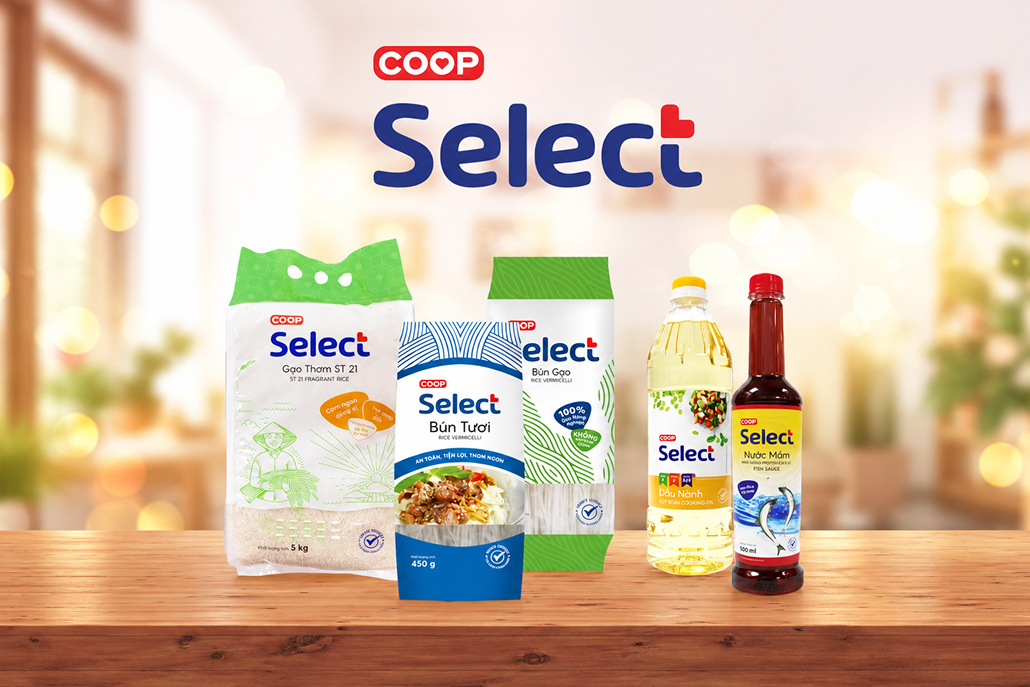
For branded manufacturers, the question is no longer simply whether their products are good. It is what they offer that customers cannot easily obtain from a nearby alternative.
A Havas Vietnam consumer study reported that 49% of surveyed consumers expressed willingness to switch retailers to buy appealing private-label products. The finding reflects the responses of the surveyed consumers; it should not be generalized to all Vietnamese shoppers or retail categories without further evidence.
The commercial pressure is clear: if a product looks similar, serves the same need and offers no obvious reason to pay more, price becomes the simplest basis for comparison.
Differentiation Is Not the Same as Recognizability
A brand can look different without giving customers a meaningful reason to choose it. A new color, a refreshed logo or a claim such as “premium quality” may improve recognition. These changes alone do not establish a meaningful reason to choose the product.
- A meaningful difference: The product, service or experience offers something relevant to a specific buyer.
- Credible proof: Customers can see, experience or verify the difference.
- Commercial value: The difference matters enough to influence choice, loyalty or willingness to pay.
A brand can be distinctive but functionally interchangeable. Conversely, a product may have a genuine advantage that customers do not fully understand. These situations require different responses.
This is why a business should diagnose its position before investing in another campaign or rebrand.
Use a Category Map to Diagnose the Problem
A Category Map helps a team compare its brand with meaningful alternatives. It is a working hypothesis, not a diagnosis of every cause of price pressure. Customer evidence, product characteristics and retail observation can inform the map, but the map alone cannot establish the effects of retailer bargaining power, distribution gaps or operating costs. Those factors require separate commercial and operational analysis.
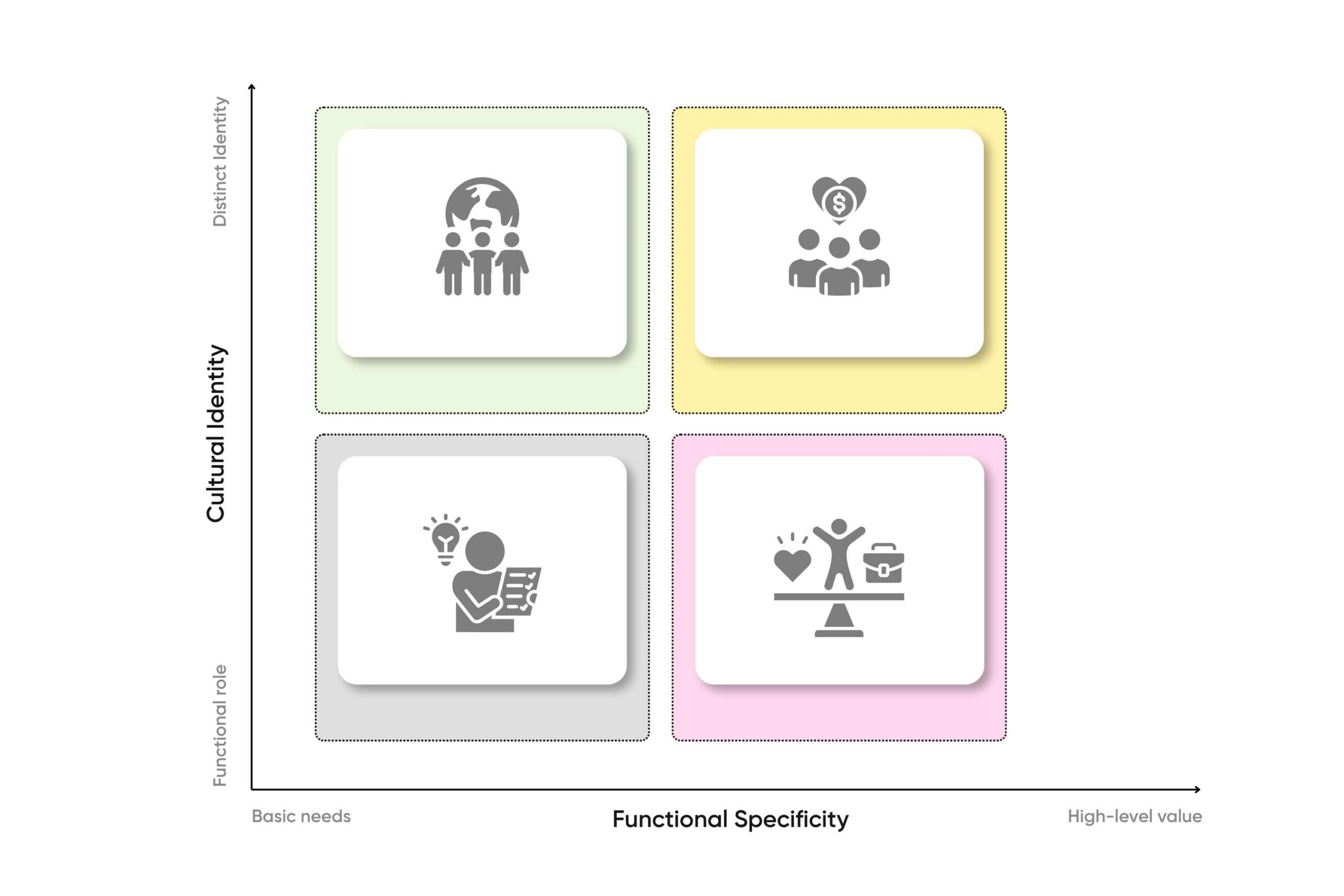
- Functional Specificity: How specifically does the offer address a defined need or job?
- Distinctive meaning and experience: Does the brand offer a recognizable origin, story, experience or identity that matters to its buyers?
1. Commodity: Low Functional Specificity, Low Distinctive Meaning
Products in this area are easy to compare. They serve familiar needs and offer few meaningful reasons to choose one over another.
When products look interchangeable, price, availability, pack size and retailer incentives often dominate the decision. That does not make the category unattractive. It means the business should be honest about the basis on which it competes. A brand may win through reliable supply, efficient operations, strong distribution or a pack-price structure that fits the shopper.
The mistake is spending heavily on premium language without changing the reasons customers choose the product.
2. Specialist Utility: High Functional Specificity, Low Distinctive Meaning
These products have a clearer job to do. They may solve a specific problem, serve a defined need or offer a functional benefit that broad alternatives do not provide as directly.
The opportunity lies in making the benefit easy to understand and verify. Product performance, credible claims, usage guidance and clear packaging can help customers recognize why the offer is different.
But specificity alone does not guarantee demand. A feature that matters to the product team may be irrelevant to the buyer. The business must test whether the intended audience cares about the benefit and whether the price makes sense.
3. Symbolic or Experiential Choice: Low Functional Specificity, High Distinctive Meaning
Some products compete through origin, culture, usage practices, aesthetics or the experience surrounding consumption.
The functional difference may be modest, yet the meaning can influence preference. Customers may choose a product because it connects with a place, a personal identity or a particular occasion.
This position is vulnerable when the story is disconnected from the product. Broad claims about authenticity or local heritage are easy to imitate if the underlying ingredients, sourcing or production practices do not support them.
Distinctive meaning works best when customers can connect the story to something real.
4. Defensible Differentiation: High Functional Specificity, High Distinctive Meaning
Here, a product has a concrete reason to choose it and a distinctive way to express that value.
A specialized benefit can be supported by a recognizable product origin, credible sourcing or an experience that competitors may find harder to replicate. This position may create more room for pricing power because comparison becomes harder. It is not a guarantee of a premium, however. The difference still needs to matter to customers, withstand competitive response and support the economics of the business.
A position in the top-right corner is a hypothesis to test, not proof that customers will pay more.
Four Ways to Move Beyond Direct Price Comparison
The map should lead to a decision about what needs to change. Four routes are worth investigating before committing to a new positioning strategy.
Route 1: Specialize the Product
Lộc Trời's Hạt Ngọc Trời portfolio includes mainstream rice products alongside more specialized offerings, such as Vibigaba sprouted nutritional rice. This example illustrates how a business can organize its portfolio around different product benefits rather than competing only within a broad category.

The strategic question is whether the specific benefit gives customers a meaningful reason to choose the product. Product differentiation alone does not prove that buyers value the difference, are willing to pay more or will purchase repeatedly. Those outcomes require evidence from customer research and commercial performance.
For Vibigaba, the product’s specialized proposition offers a potential basis for differentiation. Whether it creates a defensible advantage depends on how customers perceive the benefit, whether credible evidence supports the product claims and whether that value translates into purchasing behavior. Without this evidence, specialization remains a positioning hypothesis rather than proof of pricing power.
Route 2: Turn Product Origin and Value into a Competitive Advantage
Sông Cái Distillery offers another way to examine product differentiation. The distillery’s published materials describe a product system built around Vietnamese terroir, native and heirloom botanicals, and sourcing relationships with farming and foraging communities. The brand also reports working with more than 70 families.
These details connect the brand’s Vietnamese identity to its ingredients and sourcing practices. This gives the positioning more concrete substance than a general claim about authenticity or local heritage.
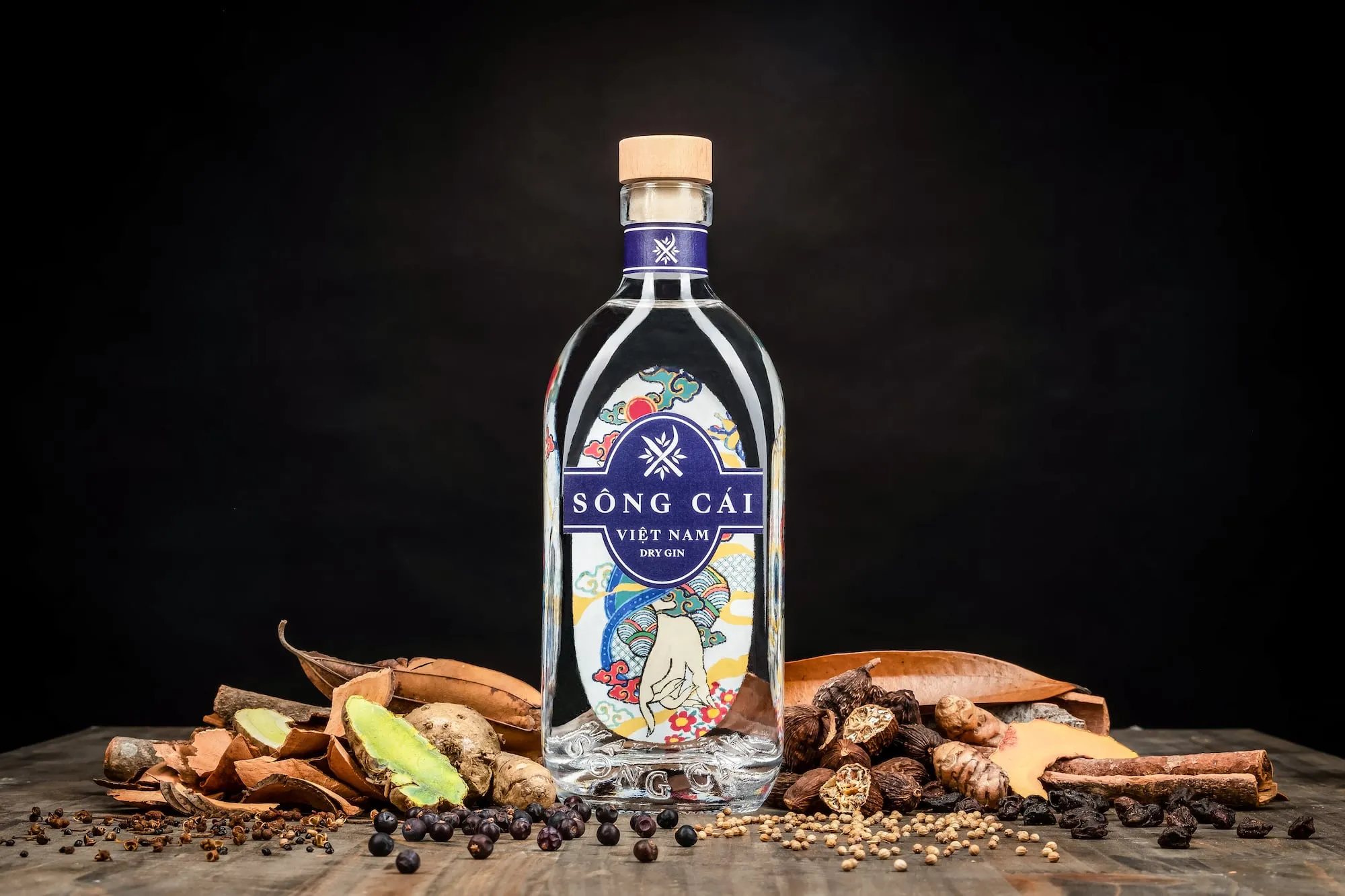
However, evidence of distinctive ingredients and sourcing relationships does not, by itself, establish that customers value these attributes enough to pay more. Nor does it prove that competitors cannot reproduce the proposition or that the approach has improved commercial performance.
The strategic implication is to identify which elements of a brand’s origin and operating model matter to its intended buyers. Customer research can test whether those elements influence preference, while sales data and price comparisons can help assess their commercial value. Until such evidence is available, Sông Cái illustrates a potential basis for differentiation, not proof of pricing power or a defensible market position.
Route 3: Change the Buyer or Buying Occasion
A brand can also reduce direct comparison by choosing a more specific situation in which it wants to win.
A generic snack may compete with dozens of similar products. A snack designed for a particular need, such as an office breakfast or a child's school box, may enter a different comparison set.
The opportunity is not to invent a niche for its own sake. It is to identify a buyer, need or occasion where the product's existing strengths become more relevant. This choice may affect the product format, pack size, channel, message and pricing architecture. It also requires evidence that the target situation is commercially meaningful.
The brand stops asking everyone to value the same difference. Instead, it focuses on the customers and occasions where that difference has a stronger role.
Route 4: Compete as a Commodity Deliberately
Branding teams do not always like this answer, but it matters.
Some categories reward scale, availability, procurement, distribution and cost control more than expressive differentiation. If customers do not value a proposed difference enough to change their behavior, forcing a premium position can reduce volume without creating willingness to pay.
In this case, the right move may be operational: improve availability, simplify the portfolio, refine pack-price architecture, reduce cost-to-serve or strengthen retailer relationships.
Brand still has a role. Recognition and trust can reduce uncertainty. But brand strategy should support the economics of the business rather than disguise a weak commercial proposition. The Category Map is useful only if it can lead to this conclusion. Not every price problem is a branding problem.
Private Labels Are a Useful Stress Test
Saigon Co.op’s three-tier private-label structure raises a practical question for branded manufacturers: if a retailer can offer economy, standard and premium options under its own architecture, what remains uniquely valuable about the brand beside them?
“Better quality” is too vague. “More premium” does not explain why. “Trusted for years” may matter, but only if customers continue to act on that trust when they see the price gap. A stronger answer names a specific job, proof or meaning that the retailer’s own brand cannot easily reproduce.
That answer may involve product performance, specialist knowledge, sourcing, consistency, service or a particular buying occasion. It should emerge from evidence, not from the language the brand already uses about itself.
Turn the Map into a Testable Decision
Map the current brand alongside five to eight meaningful competitors. Include private labels where they compete for the same buyer. Do not place brands based on internal opinion alone. Use customer interviews, retail observation, price comparisons, product evidence, reviews and sales feedback to challenge the initial map.
- Where are we genuinely different? What would remain different if the logo disappeared?
- What can we prove? What evidence can customers inspect or experience?
- Does the difference change choice? Does it matter when the price gap is visible?
- Who values it most? Which customer, channel or occasion makes the difference more relevant?
- What must change beyond communication? Does the strategy require a different product, sourcing model, pack format, service standard or pricing structure?
The output should be a shortlist of positioning plays worth validating, not a finished positioning statement.
For example, a brand might test a move from generic naturalness to verifiable origin, or from broad household use to a specific high-value occasion. Another might develop a specialist product tier while keeping its core range accessible. A fourth might decide to compete on availability and retailer value rather than pursue a premium position.
Each option should identify the evidence needed, the business changes required and the behavior that would indicate success.
Before investing in a rebrand, new packaging or a large campaign, test whether customers can explain the difference without seeing the strategy deck. Check whether Sales and retail partners can communicate it clearly, whether Operations can deliver it consistently and whether the economics still work after the cost of the new promise.
If the difference disappears when a competitor copies the headline, the advantage may be too superficial. If customers understand it but do not care, the issue may be relevance rather than communication.
Back to the Yellow Sticker
The packaged-food brand from the opening still has a pricing problem. A Category Map will not remove it overnight.
What the map can do is separate situations that look similar from a distance. The product may need a more specific job. Its proof may be invisible. The brand may be targeting too broad an audience. Or the business may be competing in a commodity category where better economics matter more than premium language.
Those situations require different decisions.
If removing the yellow promotional sticker makes the product disappear on the shelf, the business has a clear question to answer: does it need a difference customers can recognize, verify and value, or should it compete on the operating factors that matter in the category? The answer must come from customer evidence and commercial economics, not from a rebrand by default.