

A Vietnamese beverage brand does not need to become Coca-Cola to earn a place in consumers’ minds. A Vietnamese technology company does not need to replace Google across every category to build a valuable business. The more useful question is where a local brand can give customers a better reason to choose it, and whether that advantage can last beyond a campaign or product launch.
Global brands may have advantages in budgets, distribution networks, brand recognition, and experience across markets. Trying to match every advantage can turn a local brand’s strategy into an expensive imitation exercise. Similar packaging or a larger advertising budget does not automatically give customers a compelling reason to switch.
NIQ’s research on Vietnamese consumers identifies domestically produced products among the choices consumers consider when managing spending. The report also discusses interest in local communities, familiar ingredients, and sustainable practices. These findings suggest that domestic production and local relevance can influence purchasing decisions. They do not establish that consumers always prefer Vietnamese brands or choose domestic products regardless of price and quality.
Rather than copying global brands, local brands can use their understanding of the local market to identify unmet customer needs. Their familiarity with local language, habits, and culture can help them spot needs that global models may overlook. However, this advantage matters only when their products and services genuinely meet customer needs.
Brands must turn market understanding into a clear customer benefit, then demonstrate that value through the actual experience.
Local Knowledge Must Change the Offer
Local knowledge often appears in brand communications as familiar colors, regional expressions, national celebrations, or Vietnamese ingredients. These elements can make a brand recognizable, but recognition is not the same as preference. The strategic question is what the company does differently because it understands the market.
An F&B company might adapt serving sizes, opening hours, or delivery options to local consumption habits. A technology company might study how small businesses communicate with customers, then build features around those behaviors. A retailer might adjust its assortment to purchasing patterns in different locations. In each case, the advantage comes from improving the fit between the offer and the customer’s circumstances.
This is where positioning matters. A brand must define whom it serves, which problem it addresses, and which alternatives customers might consider instead. A broad claim such as “made for Vietnamese people” does not explain why customers should choose the brand over local competitors. A stronger position connects a defined audience and a relevant need with a meaningful benefit and credible supporting evidence.
Cultural references can make a brand feel familiar, but they should express a strategic decision rather than decorate a generic offer. If the product and service remain interchangeable with competitors, local imagery may attract attention without building preference. When the offer addresses a need customers recognize, identity can help communicate the difference.
One practical test is to remove the Vietnamese symbols and cultural references from the communication. What remains? If the brand still offers a clear benefit, the local layer may strengthen the proposition. If the message loses its meaning, the team may be relying on identity to compensate for a weak offer. The test helps determine whether culture supports the value proposition or carries the entire argument.
Highlands Coffee and Local Belonging
Highlands Coffee connects its brand story with Vietnamese coffee culture, community, and belonging. The company traces its origins to 1999 and describes this connection on its official origin page. Its identity is linked to a recognizable product category and local consumption habits, rather than relying on Vietnamese origin as an isolated claim.
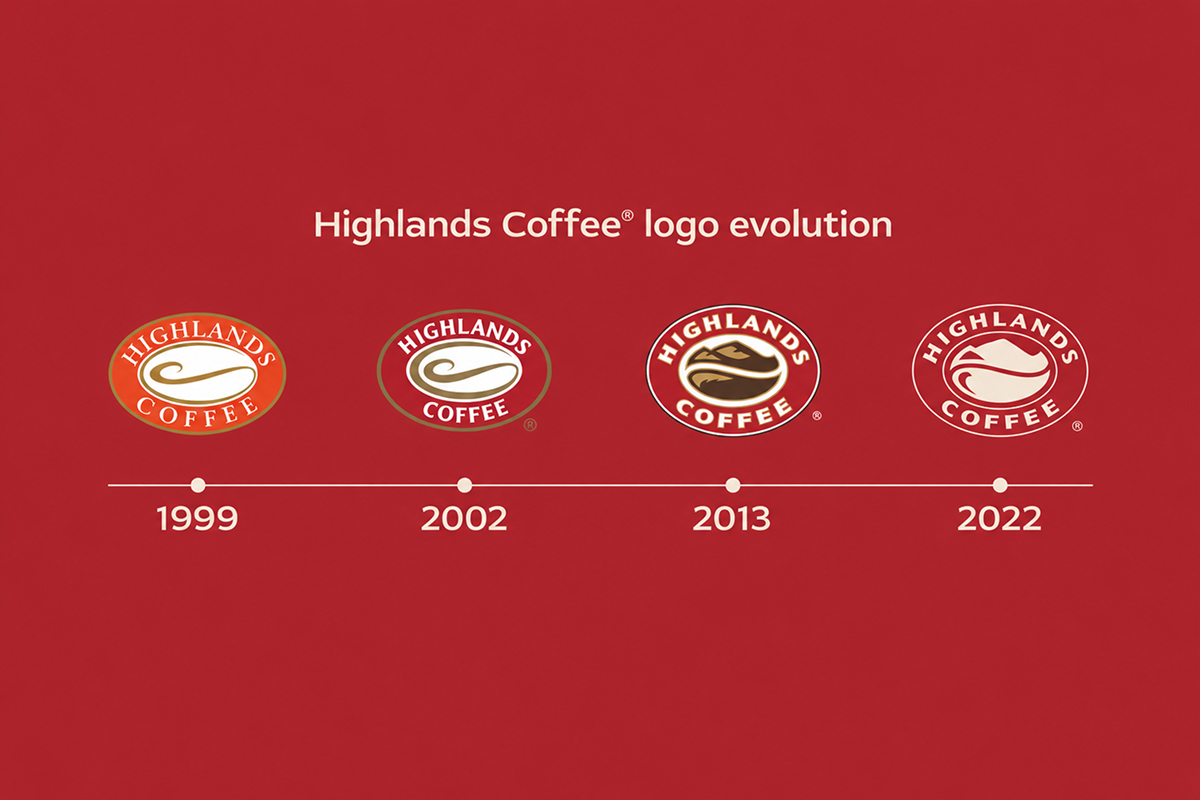
In 2022, Highlands introduced “Highlands Coffee Is Ours.” Its official announcement described the refreshed identity and platform as expressions of a community-driven purpose. The company also reported more than 500 stores in Vietnam at the time. It outlined plans to apply the refreshed identity across store interiors, uniforms, cups, its website, app, and printed materials. These details establish the company’s reported scale and intended rollout, not the campaign’s commercial impact.
The case shows how a brand idea can connect different customer touchpoints. Customers experience a coffee shop through its menu, environment, service, packaging, and digital ordering, not advertising alone. A shared idea of belonging can connect these experiences. If reflected in the actual service and environment, it may make the brand feel more familiar and relevant.
The evidence has limits. The announcement does not establish that “Highlands Coffee Is Ours” caused store growth, improved loyalty, or made the brand more competitive than Starbucks. Those conclusions would require customer research and comparable performance data. The reported store count indicates scale, not proof that cultural positioning produced it.
The lesson is to test whether the idea of belonging is reflected in the actual customer experience. Does the menu suit customers’ occasions? Is the environment a reason for them to return? And does the service meet their expectations? These questions help determine whether the brand idea translates into a reason to choose Highlands again.
Speed: Improve the Decision System
Local brands are often described as faster than global competitors. A company operating in one market may have fewer approval layers between customer feedback and a decision. Yet proximity does not guarantee speed. Unclear ownership, fragmented data, and complex internal processes can slow a local business just as easily.
Speed matters when it helps a business make timely decisions and turn them into effective action. An F&B brand might identify a recurring complaint, test a menu adjustment in selected locations, and compare results before expanding the change. A technology company might notice users abandoning a particular step and test a simpler process. Both examples require the same discipline: detect a signal, interpret it, test a response, and learn from the result.
Fast execution can also amplify mistakes. A brand that reacts to every online comment may change direction too frequently. A company that launches features without checking customer needs may make its product more complicated. Speed without strategic direction produces activity, not necessarily progress.
One Mount Group and Faster Product Iteration
One Mount Group illustrates how a company can accelerate application development by shortening the feedback loop between users and product teams. The Vietnamese technology company adopted OutSystems to build internal applications and streamline workflows across its business units.
One example is My One Mount (MOM), an employee app that initially offered basic functions such as time tracking and leave requests. The development team expanded the platform by adding features every two weeks based on employee feedback. Some employee-focused products could also be released within a month. OutSystems reports that One Mount developed more than 10 internal applications over four years using its platform.

The case shows how a shorter development cycle can help a business respond to user needs more consistently. Rather than waiting for a large product release, teams can collect feedback, prioritize changes, and improve the experience through regular iterations. However, the reported results concern internal applications. They do not establish that faster development improved One Mount’s consumer-market competitiveness or prove that local knowledge caused the improvement.
Culture: Find the Tension Behind the Reference
Cultural relevance is strongest when it helps a brand identify tensions in customer needs or experiences. A holiday, familiar phrase, or traditional ingredient provides context. The team needs to understand what customers want to do, what makes the experience difficult, and how the brand can contribute.
Biti’s Hunter explored the relationship between personal exploration and returning home through its “Đi để trở về” campaign. Rather than using Tết only as a seasonal backdrop, the campaign placed the journey away from home alongside the emotional significance of returning to family. This connection suggests a tension that may exist in young people’s lives: the desire to explore and build an independent life while still valuing family reunion during Tết. However, this is an interpretation of the campaign’s message, not evidence that the tension represents every customer in its target audience.
Brands Vietnam documents the campaign, while Biti’s describes the development of the Hunter product line. These sources provide context for the brand and campaign, but they do not establish that a cultural insight caused commercial success. Creative execution, media investment, distribution, product appeal, and timing may also influence results.

The transferable lesson is to identify a tension the brand has a credible role in addressing. F&B customers may want to save time without giving up familiar food. Financial technology users may value convenient transactions while remaining concerned about trust. Retail customers may want to manage spending without giving up personal preferences. These are hypotheses to test, not universal truths about Vietnamese consumers. Research should determine which tensions matter to a specific audience.
Patriotism: A Tailwind, Not a Business Model
Interest in domestic products can create opportunities for Vietnamese brands. NIQ’s research suggests that domestic origin can matter within purchasing decisions, but it does not mean every local company can rely on national pride to win customers. Price, quality, availability, convenience, and trust still influence what people buy.
“Made in Vietnam” can communicate origin, production capability, or a connection with local communities. Its meaning depends on the evidence behind it. A product designed in Vietnam may not use entirely Vietnamese inputs. A locally manufactured product may depend on imported components. Brands should define the scope of their claims rather than let broad origin language create expectations they cannot substantiate.
The strategic question is what local origin gives customers a reason to believe. Does local production support better access to service, more suitable products, or stronger local expertise? Does the company invest in suppliers or capabilities that improve quality? Can customers see the results in the offer? When the answers are concrete, origin can reinforce the proposition. When the brand offers only a patriotic message, customers must supply the missing evidence.
Biti’s Hunter shows how local context can contribute to a brand story, but the product remains important. A campaign cannot substitute for a product people want, a price they accept, or distribution that makes it available. The cultural idea can attract attention; product performance and execution influence what happens next.
Brands should also avoid turning patriotism into a test of customer loyalty. Consumers do not need to prove national pride by choosing a particular product. A more credible approach invites them to choose because the brand delivers value, while making its local contribution clear and verifiable. Local origin can support trust, but it should not replace evidence.
The Local Hero Playbook: Speed, Culture, Patriotism
A local hero strategy should begin with a specific customer and a defined competitive problem. Identify the alternatives customers choose, what those alternatives do well, and where needs remain unmet. A Vietnamese brand may have a clearer opportunity to win a particular occasion, location, or service need than to replace an international brand across an entire category.
Speed: Assign an owner to each customer signal and define who can approve a test. Set a response-time target, run a controlled trial, and record what changed. Expand only when the results show a meaningful improvement in customer experience or business performance.
Culture: Select one customer tension supported by research. Translate it into a specific insight and identify the business decision it should inform. Test whether that decision improves the offer or experience. Keep the insight only if customer evidence supports its relevance.
Patriotism: Audit every local-origin claim before using it. Document what is designed, manufactured, sourced, or contributed locally. Match each statement to verifiable evidence and remove claims that exceed what the business can prove.
The three elements should reinforce one another. Speed helps the business act on local insight. Culture helps identify which insight matters. Patriotism can provide another reason to care when the brand has a credible local contribution. None works reliably in isolation. The playbook is useful when each pillar leads to a clear decision, an accountable owner, and a measurable outcome.
How to Measure Whether the Advantage Is Real
Awareness alone cannot establish that a local hero strategy works. Customers may recognize a brand without preferring it, buying again, or generating profit for the business. Measurement should connect the proposed advantage to the behavior it is expected to change. A convenience strategy might track usage and friction. A cultural strategy might examine whether the intended audience recognizes the benefit and whether that affects consideration. An origin strategy should test how domestic production influences choice alongside price and quality.
Establish a baseline before introducing a change. Define the audience and comparison period, then select indicators that reflect the intended outcome. Depending on the business, these might include conversion, repeat purchase, retention, complaints, service response time, distribution coverage, or contribution margin. A campaign can generate many views without improving the behavior that matters commercially.
Where practical, compare groups or locations that receive the intervention with comparable ones that do not. A before-and-after comparison can help, but results may also reflect seasonality, pricing changes, competitor activity, or distribution expansion. Record these factors and avoid attributing every improvement to local positioning. If the evidence cannot isolate the cause, describe an observed change rather than claiming causation.
Qualitative research can help explain the numbers. Customers may choose a local brand because it is easier to access, feels more familiar, suits a particular occasion, or offers a more suitable price. Each explanation implies a different business decision. Treat customer responses as evidence for further testing, not automatic proof of the only cause.
Review the results against the original proposition. If the intervention improves the intended outcome, identify which part of the offer contributed and whether the effect holds across relevant customer groups. If it does not, revisit the insight, execution, or assumption that localness matters in that context. This prevents a promising campaign from becoming a permanent strategic belief without sufficient evidence.
Local Advantage Starts With a Better Reason to Choose
Vietnamese brands do not need to defeat global competitors on every measure. They need to identify where local knowledge can create a better customer experience or solve a specific market need. The examples in this article show different possibilities: connecting a brand with local belonging, improving internal application development through faster iteration, and expressing a cultural tension through a campaign. Each case also shows why evidence matters when assessing the source of competitive advantage.
Speed, culture, and local origin create value only when they inform meaningful business decisions. Their contribution should be visible in the offer, customer experience, or operating model-not just in brand communication.
The first step is not to imitate a global brand or add more Vietnamese symbols to the identity. Define the customer, understand the alternatives, and identify where the business can provide a better experience. That work belongs to positioning: the choices that determine whom the brand serves, what it promises, and why customers should choose it.
If your team needs to clarify its competitive position before investing in a new brand direction, book a B2M Snapshot. Use the discussion to identify the customer problem, test assumptions behind the local advantage, and determine what evidence should support the next strategic decision.