Sit in on the meeting and you will hear it. The head of sales describes the company one way: technical, dependable, priced to win deals. The head of marketing describes it another: warm, design-led, made for people who care about the details. Both are describing the same company. Neither notices they have just described two different brands. The customer notices. The customer is the one holding both versions at once.
Brand fragmentation looks like a design problem. It is a structural one. It shows up when a company grows faster than the system meant to hold its brand together. And it has almost nothing to do with how many parties sit between you and the buyer.
You Outgrew the Binary Years Ago
For decades, business sorted itself into two boxes. B2B sold to rational buyers who wanted specs and proof. B2C sold to emotional consumers who wanted story and feeling. Almost nobody lives in those boxes now. You sell direct and through partners. You run a marketplace and a flagship store. You sell to a distributor who sells to a retailer who sells to a shopper, and somewhere in that chain, a stranger re-tells your story for you. B2B2C, DTC, platform, hybrid: the labels keep multiplying because the models keep blending.
So the old advice, decide whether you are B2B or B2C, no longer describes how almost anyone sells. The trap is that the binary survives as a mental model long after it stops holding as a business model. It lives on in the org chart, where one team owns the business audience, and another owns the consumer. It shows up in the messaging, where the deck and the campaign were written by people who never compared notes. The business moved on. The brand often did not.
The less obvious risk grows as the model gets more sophisticated. Every hop you add is another place the brand can break. When you sell direct, you own the entire experience, with no partner to absorb the rough edges. When a channel partner sells for you, they re-tell your story in their words, and the version that reaches the customer is the one you did not write. More routes to market, more chances to sound like a different company on each one.
Underneath all of it sits the fact the acronyms hide. Every model, however many parties and however direct, ends with a single human deciding whether to trust you. B2M is the layer that keeps the brand meaning the same thing the whole way down that chain.
The Customer Was Never the Variable
Buying contexts change. The customer’s mind does not. People do not run a rational self at work and an emotional self at home. In every context, they are doing the same thing: lowering risk and protecting time, the one resource they cannot earn back. The procurement manager comparing vendors, and that same person comparing skincare at midnight are running the same instinct.
So when your company forces that person to relearn who you are on every channel, you are not adapting to them. You are adding work to their decision. The website says one thing, the partner’s pitch says another, the store says a third, and the customer has to reconcile the gaps. That reconciliation has a price. Call it the confusion tax. In a market with endless alternatives, the brand that charges the least confusion tax wins.
What Inconsistency Actually Costs
Go back to that meeting. The reason sales and marketing describe two different companies is not that either of them is wrong. It is that nothing forces them to agree. There is no shared architecture underneath, so each team optimizes for its own audience and the seams show wherever the two meet.
Left alone, that gap compounds, and it does so quietly. The brand stops claiming a clear position in anyone’s memory, so recall fades. With no value story to hold onto, customers fall back on the one number they can always compare, and you start losing on price. To win those deals back, the company reaches for promotions, and pricing power erodes a little more each quarter. Growth starts depending on tactics instead of equity that holds. None of this arrives as a crisis. It arrives as a slow leak, which is exactly why it runs for years before anyone names it.
B2M: The Brand as an Operating System
Brand-to-Market is not a campaign idea. It is xolve’s brand strategy framework for deciding where the brand sits in the company. In the xolve model, the brand is not the outer layer of logos and ads. It is the operating system: the thing that sets how the company communicates, how sales persuades, how products are designed, and how the business reacts when the market shifts.
That single move, treating the brand as an operating system rather than decoration, is what connects brand to revenue. A brand built this way conditions the market before sales ever picks up the phone. It earns authority early, so the company stops discounting out of fear and holds its margin. And it gives the team rules and templates, so a company can grow from ten people to a hundred without losing whatever made the founder’s version work. A logo cannot do any of that. An operating system can.
In Vietnam, Trust is The Product
This matters more here than almost anywhere. Vietnam is a trust-sensitive market. Whether the customer is buying industrial equipment or premium retail, they are weighing risk to their capital, their time, and their own credibility for having chosen you. The space between what you claim and what they believe is the credibility gap, and in this market, it is wide by default.
In some markets, a brand can run on aspiration. In Vietnam, it runs on proof. B2M treats every touchpoint as a proof point. When the story holds across the website, the company profile, the sales conversation, and the physical space, something shifts in the buyer. They stop asking whether they can trust you and start asking when you can start. That shift is the entire game, and it is impossible to win if the brand says a different thing on every channel.
The Ladder That Stops You from Competing with Yourself
There is a version of fragmentation that comes from your own product line rather than your channels. A company launches a cheaper offer to reach a new segment and quietly undercuts the premium one, because now the brand means two incompatible things at two price points. Brand architecture is the logic that prevents this, and B2M builds it as a product ladder sorted by the customer’s risk and involvement.
At the bottom sits the entry offer, the hook. Low friction, easy to say yes to, not always where the money is. Its job is to earn the right to sell the rest, which means it has to carry the same quality signals as everything above it, even at a low price. In the middle sits the core offer, the engine, the main source of revenue, and the place the brand promise is most visible. At the top sits the hero offer, the halo, high margin, and authority-setting, the proof of what the company can do at its ceiling. Built right, every new product reinforces the ladder. Built wrong, each new product chips at the one above it.
Why It Works: the Brain Prefers What It Can Predict
B2M works because of how people process risk. When the mind meets a consistent pattern, it relaxes. When it meets contradiction, it tenses, and tension reads as doubt. Line up your enterprise credibility with your consumer accessibility, and the customer reaches trust faster, because you are the easiest version of the choice to understand. In a crowded market, being the easiest to understand is not a soft advantage. It is a commercial one, and it compounds in your favor over time.
Vinamilk: One Logic, Every Kind of Buyer
Vinamilk is the clearest local proof that the binary was never the point. It sells to millions of households, which is B2C. It sells to hospitals and schools vetting a supplier, which is B2B. And it sells through the retailers and distributors who put it on shelves, which is B2B2C. Three models, one brand.
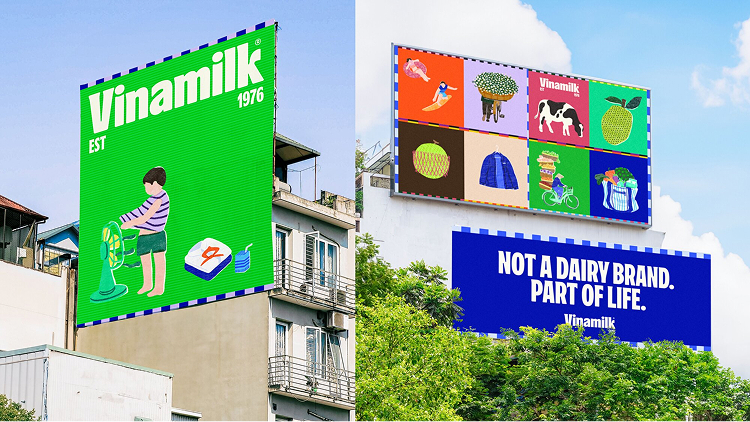
Rather than spin up a consumer brand and a separate business brand, Vinamilk runs as a single quality system for the market. Its commitments to safety, transparency, and consistency are not slogans. They function as production standards, and standards translate across every model. A mother and a hospital procurement officer meet the same brand logic, and neither has to do the translating. Read through a B2M lens, that is why Vinamilk holds a premium in a category full of cheaper options, and why it reads less like a dairy company and more like a standard the market measures against.
FPT: The Brand as the Portable Asset
If Vinamilk shows one logic across buyer types, FPT shows one brand stretched across businesses that have almost nothing in common. It sells software and IT services to global enterprises through FPT Software and FPT IS. It sells broadband to families through FPT Telecom, electronics through FPT Shop, and education through FPT University and its schools. Enterprise, retail, telecom, classroom: four worlds, one name.
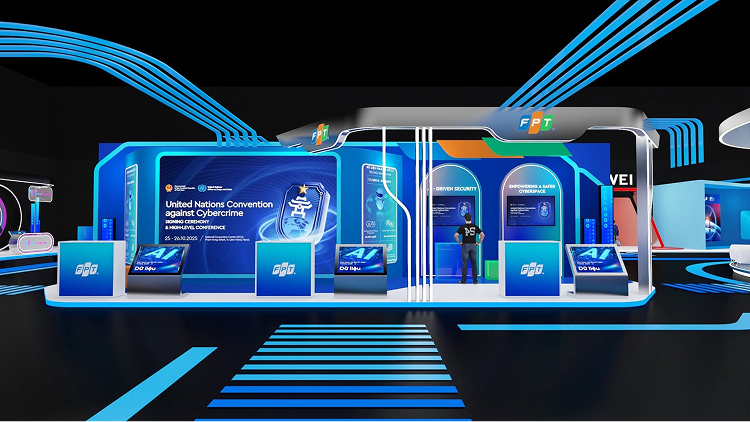
That name is the whole mechanism. A family that trusts FPT for home internet meets the same brand when a procurement team weighs FPT for an enterprise IT contract, and again when a student enrolls at an FPT school. In each context, the brand does the same job. It signals capability and lowers the risk of choosing FPT over an unknown. Credibility earned in one world quietly underwrites trust in the next.
The clearest proof of what that brand is worth is happening now. As FPT reworks the ownership of its telecom and retail arms to reposition itself as a focused technology group, those businesses keep operating under the FPT name, because the name is the asset that lets them stand on their own. A brand strong enough to survive a corporate restructuring is exactly what B2M is built to produce.
Governance: How You Keep It from Drifting
None of this holds by goodwill. The largest risk in a growing company is brand drift, the day the sales team in Hanoi starts telling a different story than the marketing team in Saigon, and nobody decides which version is right because no mechanism exists to decide. B2M handles drift through governance. We do not hand over a brand guide and hope it gets read. We build the tools a team actually uses. A narrative spine, the master script that lets every employee explain the core value the same way. A visual logic that makes design decisions consistent instead of personal. And implementation gates, a checkpoint where new work is tested against the architecture before it reaches the market. Governance is what turns a brand from a document into a system that holds under pressure.
The Shapes Failure Takes
When a company has no operating system holding the brand together, the failure tends to take one of a few recognizable shapes. There is the ghost brand: strong design, no market presence, identity, and sales never connected. There is the commodity trap: known only for price, with a flat architecture and no hero offer to anchor value. There is the Frankenstein brand: a pile of sub-brands that do not speak to each other and compete internally. And there is the founder’s bottleneck: the brand lives only in the founder’s head, so it cannot scale past them. Different symptoms, one root cause. B2M is the treatment for all of them.
What the Work Looks Like
- Strategic audit. We find the gap between what the brand promises and what customers actually experience, by interviewing sales teams, customers, and partners to locate the friction.
- The narrative spine. We set the story that works in the boardroom and the living room without changing shape. This is the brand's truth.
- Architectural layout. We map the product ladder, decide what is entry, core, and hero, and settle the naming logic.
- The message house. We build the sales tools: approved arguments, objection handling, and value propositions for each tier.
- Activation and rollout. We deploy the system across websites, sales decks, social media, and physical space. This is often where Favor takes over the production pipeline.
- Governance. We set the guardrails and train internal teams to run the system, so the company does not drift back to old habits.
The Real Cost of Waiting
Founders often say they will fix the brand once the company is bigger. That logic runs backward. Fixing a confused brand after you have scaled costs far more than building the architecture early, because the confusion tax compounds with every hire and every new channel. Picture fifty employees, each describing the company a little differently to a customer, a partner, or a candidate. That is not one brand told fifty times. It is fifty mediocre brands wearing the same logo. The longer you wait, the more versions there are to unwind.
Architecture is the Only Moat Left
At xolve, we do not stop at design. We architect. The B2M method is built for the Vietnamese context: how trust is earned here, how hierarchy works, and how fast this market went straight to mobile. And it is built for a market where anyone can generate a logo and a tagline in seconds.
That last point is the whole case for architecture. When the visible layer of a brand is free to copy, the visible layer stops being the moat. A logo can be lifted. A feature can be cloned. The way a company’s values, sales logic, and customer experience lock together cannot, because it is not a thing you can see and lift. It is a system. That system is how a company stops competing on price and starts competing on authority.
Three Questions Before You Commit
You do not need a full diagnosis to know whether this applies to you. Three questions usually settle it. Can your newest sales hire explain your value without you in the room? Does your budget offer make your premium offer look overpriced? Are you spending more on marketing and converting less? If any of those lands uncomfortably, the problem is not effort, and it is not budget. It is architecture, and that is exactly the work B2M does.
Book a B2M Snapshot to see where your architecture stands.