
The Brand-to-Market method
Brand-to-Market connects the decisions behind a brand with its identity, customer-facing materials and introduction to the market. Research informs the strategy. The strategy guides design and messages. Market planning establishes how the offer will reach people. The five phases describe the work, not a fixed package. Your project selects the services and outputs it needs and builds on suitable work already in place.
The five phases
1. Research & Audit
What do buyers need, how do they choose and what does the evidence support?
An Insight Report with findings, sources, implications and limits. A separately selected existing-evidence assessment provides a reuse and gap note.
2. Brand Strategy
Who should the brand serve, why should people choose it and what will the business prioritize?
A Brand Blueprint recording the position, supporting proof, core messages, trade-offs and direction for later work.
3. Brand Identity
How should the brand look and sound in the settings that matter?
The selected identity guidelines and master files. Naming and tagline development are separate selections.
4. Brand Experience
Which customer-facing materials need attention, and what designs should be made?
An Experience Plan, selected application designs, or both, with the agreed files and specifications.
5. Go-to-Market
How will the offer reach people, who will implement the activity and what will be reviewed?
A plan for the agreed channels and period, with activity, timing, responsibilities, budget assumptions and measures. Production and operation are separate.
The project begins with the decision your business needs to make. Relevant existing work carries forward, and each phase builds on the brief.
B2M in practice: The Joyful Nest
- Research & Audit: We explored what families need after birth through market research and interviews, drawing on the founders’ own experiences of early motherhood.
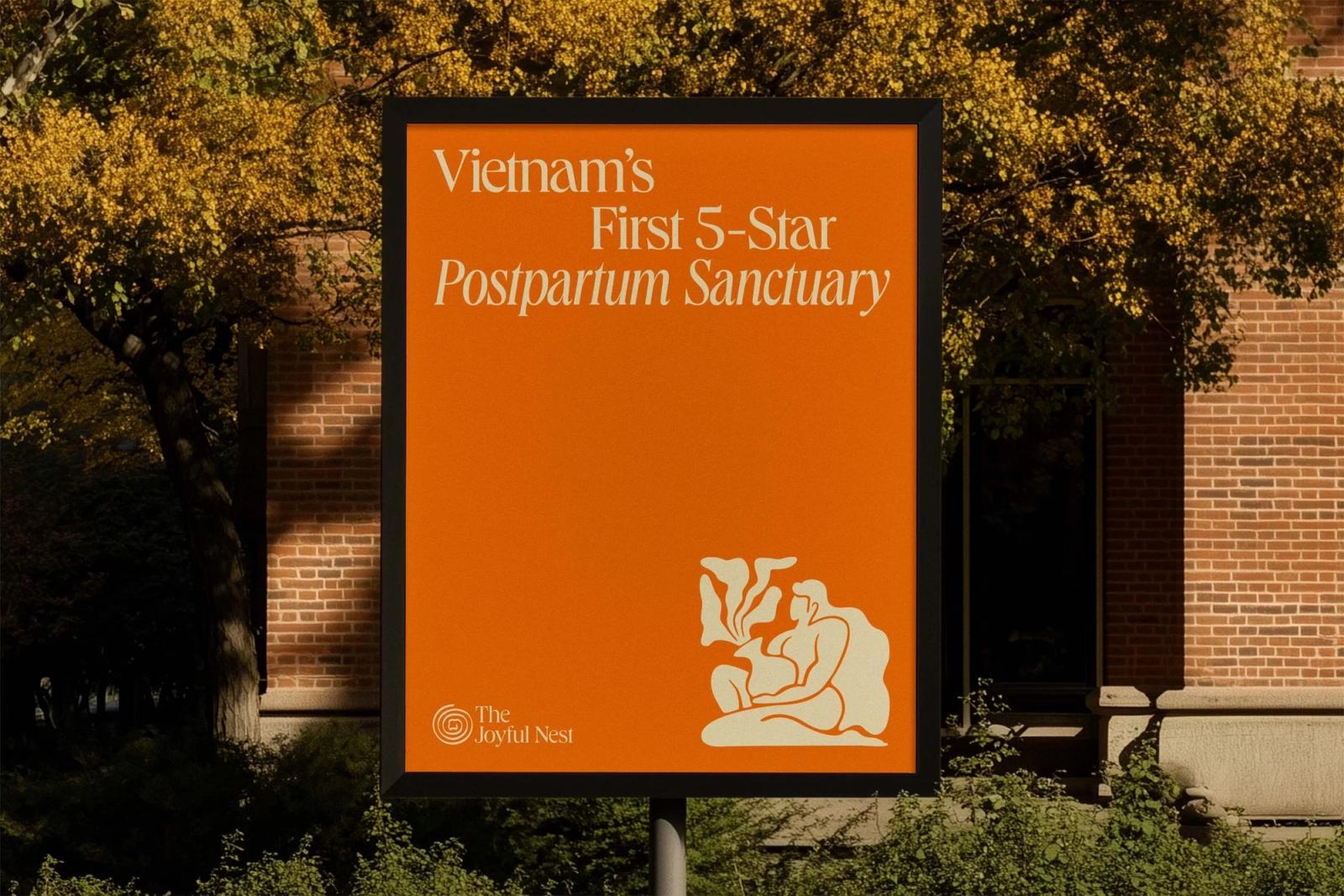
- Brand Strategy: We positioned The Joyful Nest as “Vietnam’s First 5-Star Postpartum Sanctuary.”
- Brand Identity: The blessing “Mẹ tròn, con vuông” inspired an identity built around circles and squares.
- Brand Experience: The identity carried through to packaging, in-room details, sales & marketing collaterals, and the website.
- Go-to-Market: A TV commercial and social outreach introduced the brand, the website made it easy to enquire, and ongoing brand maintenance kept the experience consistent.
The project starting point
The project begins with the business decision and the work already available. An established strategy may be ready to guide an identity. A suitable identity and application brief may be ready for design.
Existing inputs are reviewed against the task before further work is recommended. Relevant research, strategy and briefs carry forward, with unresolved questions identified for the next stage.
Evidence and measurement
Research can support a direction, change it or show that it should not proceed. An agreed strategy records a decision based on the evidence available; new findings may justify revisiting it.
Measures defined for the project help the team assess change. Sales or enquiries alone do not establish that branding caused the result.